Principles of emergencies handling and survival
| Site: | LMS Moodle VŠE |
| Course: | Emergency management at VŠE |
| Book: | Principles of emergencies handling and survival |
| Printed by: | Nepřihlášený host |
| Date: | Thursday, 5 November 2026, 4:29 AM |
Description
General parts of this section were created and provided to VŠE by G U A R D 7, v.o.s.
1. Emergencies
An emergency or a security incident is an event that disrupts the normal operations or security policies of an organization. These incidents can take many forms and can impact employees or others in the organization's environment (specifically students in the case of a university) in various ways.
Security emergencies include:
- fire inside the building or premises,
- a large-scale fire in the vicinity of the facility,
- gas leakage,
- leakage of toxic substances, air contamination,
- water accident,
- massive power failure,
- failure of technical equipment or elevator,
- injury or medical collapse of a person requiring immediate intervention,
- a requirement to shelter the population, a CO shelter emergency.
A separate category of security threats are attacks on cyberinfrastructure, such as ransomware (virus infection). A potential infection poses a risk of significant financial loss. It is crucial to report to the VŠE HelpDesk as soon as possible. The basic principles for detecting and safely handling this type of threat are summarized by the Informatics Center. Special training is also being prepared for this purpose.
Security incidents based on an attack that immediately threaten life deserve the greatest attention and preparedness.
These include:
- receipt of dangerous/suspicious consignments,
- (threat of) planting an explosive system,
- forcible entry into a building by an unauthorised person,
- violent behaviour or aggression by an employee, contractor or a student,
- attack by an armed assailant.
The principles of dealing with and behaving during such an attack are the subject of the following chapters.
2. Handling and reporting of security incidents at VŠE

VŠE has a nonstop crisis information line for employees and students:
224 09 5555
Report any observed abnormalities to this line immediately, which may be:
- suspicious and dangerous persons moving in buildings of VŠE,
- suspicious (potentially dangerous) abandoned objects on the premises of VŠE,
- fire on the premises of VŠE,
- any other situation that you assess as a security threat.
This line is not primarily used to report technical problems in classrooms or offices. For these purposes, dial the Emergency Technical Support Line 224 09 8999.
You can also find important contacts at the central website sos.vse.cz, the purpose of which is to warn of any current threat and to provide instructions on how to proceed.
Jižní Město and Jindřichův Hradec campuses have their own crisis information lines, which are not, however, in a nonstop regime (their operating hours are determined by the operation of receptions):
Jižní Město: 224 09 4222
Jindřichův Hradec: 384 11 7200
The emergency reporting in the dormitories operates in a similar mode. In case the line is not available, please call the 158 line directly.
- Blanice reception: 22409 2515;
- Vltava reception: 22409 8697;
- Eislerova dormitory reception: 22409 2213;
- University hotel reception: 22409 2107;
- other dormitories: call the emergency lines directly (158, 150, 155, 112).
Last but not least, a system of automatic sending of SMS notification messages in case of a security incident will be put into operation at VŠE so that employees and students are immediately informed about the occurrence of a threat. The system of automatic SMS notifications will be functional in both Czech and English and will be tested repeatedly during the year after prior notice.
Following the extraordinary meetings of the VŠE management and the Rector's College in early January 2024, the following measures were taken:
- Pursuant to SR 2/2021 (Article 3, b. 2), the Bursar has modified the access regime to the VŠE buildings as follows (valid until further notice):
- Entry to the premises of VŠE on working days after 18:00 outside the teaching period (including the examination period) is possible only on presentation of the VŠE identification card (external visitors after showing their identity card at the SB or IB entrance).
- Entrance to the premises of VŠE on days off (holidays and weekends) after 1:00 p.m. is possible only after presenting the VŠE identification card (external visitors after proving their identity at the SB or IB entrance).
- Large luggage is obligatorily stored in lockers at the entrances, or, in case of insufficient capacity, in the staffed cloakrooms in the NB and IB.
- The VŠE management asks for cooperation in checking large luggage (Article 2, Paragraph 2), carried out by guards at the entrance to the premises. For smaller luggage and items brought in, random checks continue to apply.
- Introduction of the organisation of face-to-face awareness-raising events on emergency situations and first aid.
- In connection with the notification system, contacts for staff and students for communication in the event of a crisis situation are regularly checked and updated.
- The sufficiency and functionality of the VŠE CCTV infrastructure is regularly checked.
- The feasibility of introducing turnstiles at the entrances to the VŠE premises is analysed.
2.1. Checking and adding a mobile phone number for crisis communication in InSIS
Part of the security measures at VŠE is the system for sending SMS messages to students and employees in the case of a crisis situation.
In this context, all VŠE employees are asked to verify and, if necessary, update their mobile phone numbers in InSIS. The entered contact phone number will only be used in case of emergency communication or for functional verification.
The system of SMS notifications will be tested repeatedly throughout the year.
How do I check a phone number in InSIS?
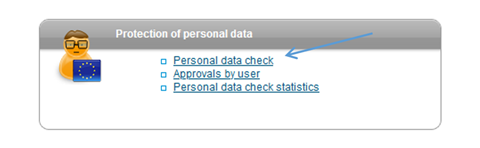
- When you log in to InSIS, select the Personal data check app in the Privacy of personal data section.
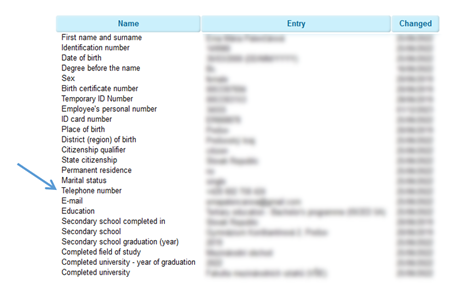
- On the Personal data check page, you will see your personal information and you should find your phone number under Telephone number or Mobile phone number.
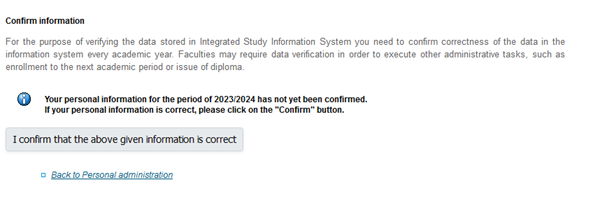
- If the phone number is correct, confirm the correctness of the above-given information at the bottom of the page. Check the other details displayed as well.
How do I change my mobile phone number in InSIS?
Contact your faculty systems integrator with the correct mobile phone number and they will add it. If you are an employee of the Rector's Office, contact the Rectorate's system integrator. You can see the list at System integrators.
3. Suspicious objects a persons
One security threat is a suspicious object, which usually:- doesn't fit into the routine of the environment,
- has no apparent owner,
- is located in a risky place in terms of location and time.
The main principles for handling such an object include:
- Do not touch or open such an object!
- Try to find the owner in the vicinity - look around, ask.
- Inform about such an object on the crisis information line 224 09 5555 or the Police of the Czech Republic on line 158.
- Do not examine the object before the arrival of the relevant intervention unit.
- Try to divert other persons to safety.
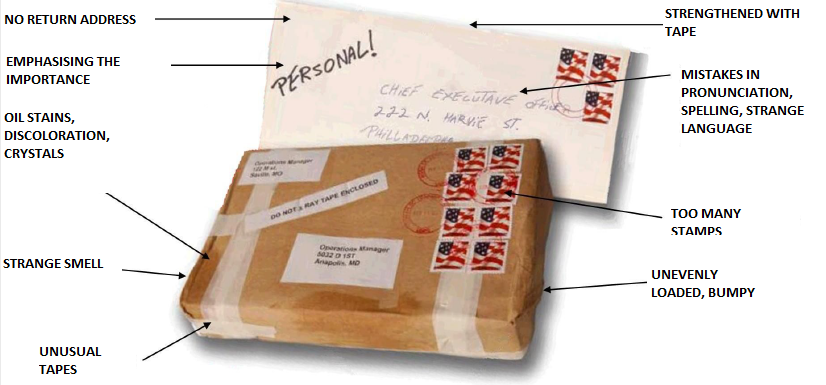
Such an object may also be a postal item whose suspiciousness is manifested by the following characteristics:
A suspicious person is someone who:
- shows an unusual interest in the event, the participants, the security, the nooks and crannies,
- is noticeably nervous, avoids eye contact, shows symptoms of stress,
- is untrustworthy in communication, manifested by lying, avoidance, nervousness,
- does not fit in with his appearance in terms of clothing, luggage, etc,
- is overly dominant or aggressive - yelling, bumping into things or people.
In that case:
- be clear about exactly what you find suspicious and why,
- if you fear an attack, prepare to defend yourself,
- report the person to the crisis information line 224 09 5555 or the Police of the Czech Republic on line 158.
4. An armed assailant attack
How do we behave when an active assailant-shooter attacks? Imagine you are at the scene of an attack where an armed assailant is shooting at everyone around with the intention of killing as many people as possible. Your goal is to survive..
Expect that if this situation occurs, you will not be prepared. An active shooter attack is always sudden and surprising. It's entirely out of the ordinary.
You'll find yourself in a situation you've probably never been in before. Please be aware that the following information may save your life and the lives of others. There have been active shooters even in the Czech Republic.
Location of an attack is usually linked to the motive for the attack - revenge for the loss of employment, expulsion from studies, long-term psychological or physical harm, death of a close person, neighbourhood relations, racial intolerance, social exclusion, financial hardship, political and religious beliefs, etc. Soft targets, i.e. places with high concentrations of people and low levels of security, are most at risk:
- social or sporting events,
- cinemas and theatres,
- churches,
- offices,
- sports facilities - water parks, ice rinks, etc..,
- hospitals,
- schools,
- railway stations, underground stations, etc..,
- shopping centres, etc.
An active shooter is an armed person (usually male) who attacks other people with a firearm or other weapon with the intent to kill as many people as possible.
The attacker may attract your attention through suspicious behaviour, nervousness, etc.
In most cases:
- The method, place, and time of the attack are planned in advance.
- The attacker uses firearms - pistols, revolvers, self-loading rifles or submachine guns. The use of motor vehicles (Olga Hepnarová, who deliberately drove a truck into a tram stop in Prague in 1973, killing 8 people) or explosives is possible.
- The attacker is not negotiating.
- The targets are usually random people, but it is possible to target victims deliberately.
- The attacker does not expect to survive. It often ends in suicide. His behaviour is consistent with having nothing left to lose.
Men and women tend to deal with stressful situations in different ways. Men tend to increase their cortisol levels in the event of danger, while women tend to decrease them. Men are more likely to react with aggression, whereas women are more likely to flee, rely on others for help, or attempt to make a deal with the attacker.
5. RUN - HIDE - FIGHT strategy
In cooperation with the FBI (Federal Bureau of Investigation) and DHS (U.S. Department of Homeland Security), based on case studies and in accordance with the stress management strategy, the RUN - HIDE - FIGHT strategy was developed.
It provides guidance or recommendations on how to behave in the event of an attack. It is a list of steps (step by step), the order of which is very important and their execution with a calm mind, a clear plan and without delay can save a life. It is important to understand that it is not necessary to perform all the elements of RUN - HIDE - FIGHT, but to operatively select the most suitable option and immediately execute it with full commitment.
Basic rules for surviving an active shooter attack:
- If possible, leave the place of attack as quickly as possible - RUN!
- If you can't, take cover and secure your hiding place as much as possible - HIDE!
- If you make contact with the attacker, fight for your life - FIGHT!

In the context of whether to run or hide, an equally important question arises: namely whether to do so INWARDS, i.e. to hide in a safer room, or OUTWARDS, i.e. through the escape exits.
IN x OUT
The final decision must depend on whether you can recognize where the attacker is, whether he/she is alone, in what direction they are moving, or whether any of these facts are available to you at all.
Especially when you do not have information about the location and number of attackers, the IN strategy can be more effective. Incidentally, the OUT strategy also asks that you continue to exercise caution, stay as close to walls as possible, and do not go out into open spaces, if possible.
Call the police - 158 only if it is safe to do so.
- Only call if you do not alert and put yourself or others in danger.
- Speak calmly, clearly and understandably.
- Tell who you are, where you are and the situation at the scene of the attack.
- If you know, describe the attacker - number, weapons, appearance.
- Terminate the call only at the direction of the operations officer. If you must end the call for security reasons, do not hang up so that the operations officer can listen.

IF IT'S SAFE TO DO SO, CALL 158
5.1. IN or OUT

You are in the Vencovského Auditorium. The assailant is approaching from the direction of the NB cloakroom. Which way will you leave the building? Or will you stay hidden in the VA? Drag and drop the figure icon to the area corresponding to your decision and check your choice with the Check button.
You are in the RB101 lecture hall. You hear screaming and gunfire inside the building outside the lecture hall, but you cannot identify the direction of the attacker's movement. What course of action or direction will you take? Drag and drop the figure icon to the area corresponding to your decision and check your choice with the Check button.

You are in your office on the second floor of the NB. You hear shouting and gunfire, but you cannot determine the exact location or floor where these sounds are coming from. What course of action or direction will you take? Or would you stay in the office? Drag and drop the figure icon to the area corresponding to your decision, if your choice is to stay in the office, do not move the icon and just click on the Check button.

You are on the ground floor of the RB Atrium. You see an armed attacker opening fire outside the canteen after entering the IB. What course of action or direction will you take? Drag and drop the character icon to the area corresponding to your decision, if your choice is to take cover in one of the RB classrooms, do not move the icon and just click on the Check button.
The following video presents the escape exits from the RB Atrium, with their location and the point of escape from the building shown on the campus map. The video is paused at this point. Always click on the PLAY arrow to resume playback.

You are in your office on the fourth floor of the RB. Suddenly you receive a text message warning you of an emergency situation (attack) on the VŠE Žižkov campus and the same warning can be found at sos.vse.cz. However, you do not have any information about the number, position, and direction of movement of the attackers. Will you flee or stay in the office? Drag and drop the figure icon to the area corresponding to your decision, if your choice is to hide in the office, do not move the icon and just click on the Check button.
5.2. RUN!
If you have a chance to escape the attack and get to a safe distance, take it!
- First think about your escape plan, calm down and imagine your escape route.
- Get rid of anything that makes noise when you move - keys, heels...
- If you have a chance to escape, run. Get to a safe distance from your attacker.
- Leave personal belongings where they are, don't take them with you. The important thing is to save your life.
- When escaping, warn others to avoid entering the danger area and help them escape.
- Once you are safe, call the police - phone no. 158.
- Do not give first aid to the injured. As soon as the paramedics arrive, they will take care of them.
- Listen to where the shots are coming from and try to avoid these areas.
- Move crouched, use any cover you can, don't move in the middle but near the walls.
- If you encounter intervening officers during your escape, raise your hands and keep calm so they don't mistake you for the attacker.
- Do not stay near the building, but get to a safe distance.
Task
Task
Imagine that you are going to run away from where you currently are. Plan your route.


Do you know the buildings you are most often in? Remind yourself of the escape routes, exits and important places for dealing with extraordinary situations in the VŠE premises, presented in the mandatory training on fire protection and occupational health and safety, which you can find in Moodle in the Training courses section.
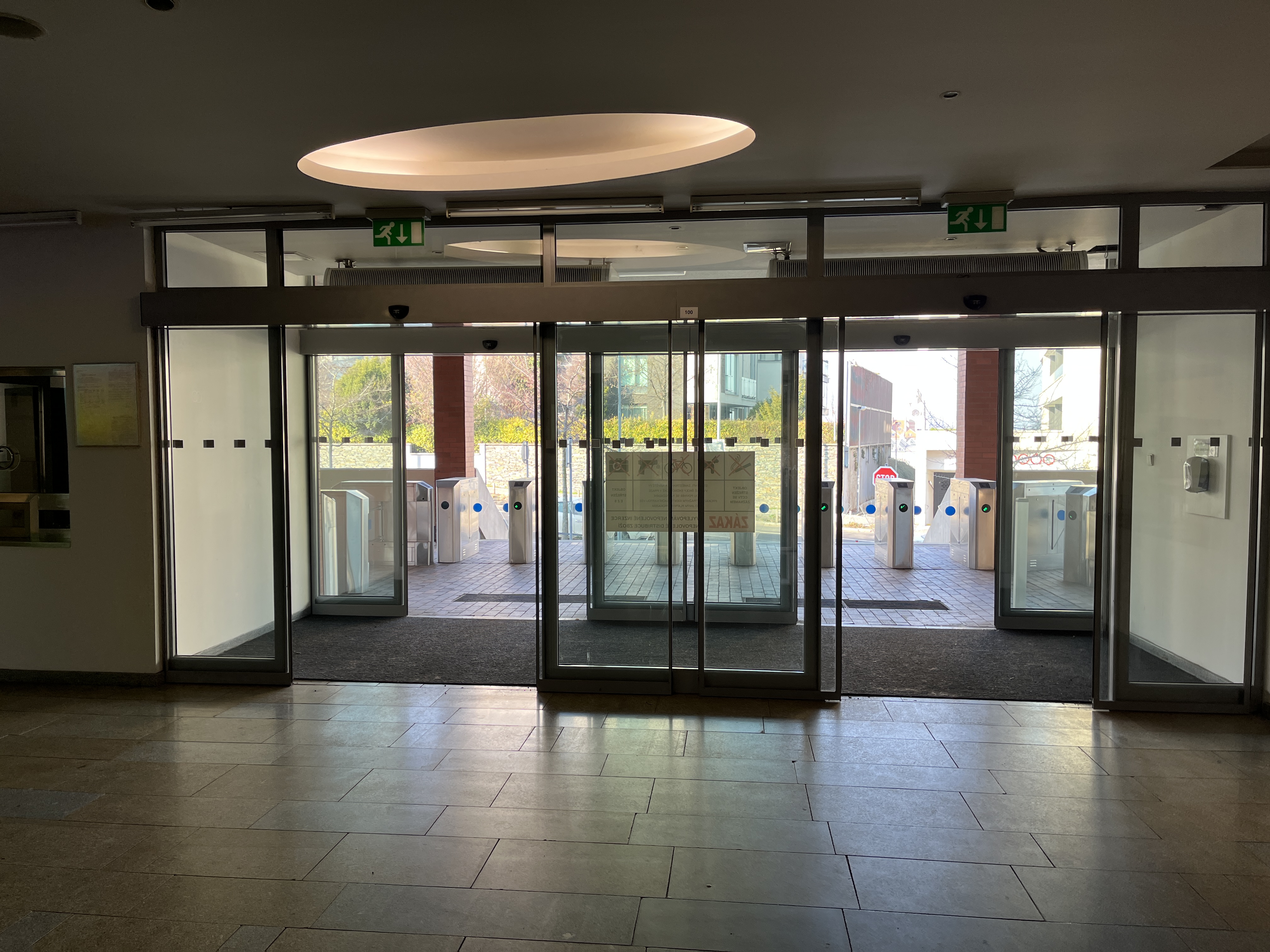
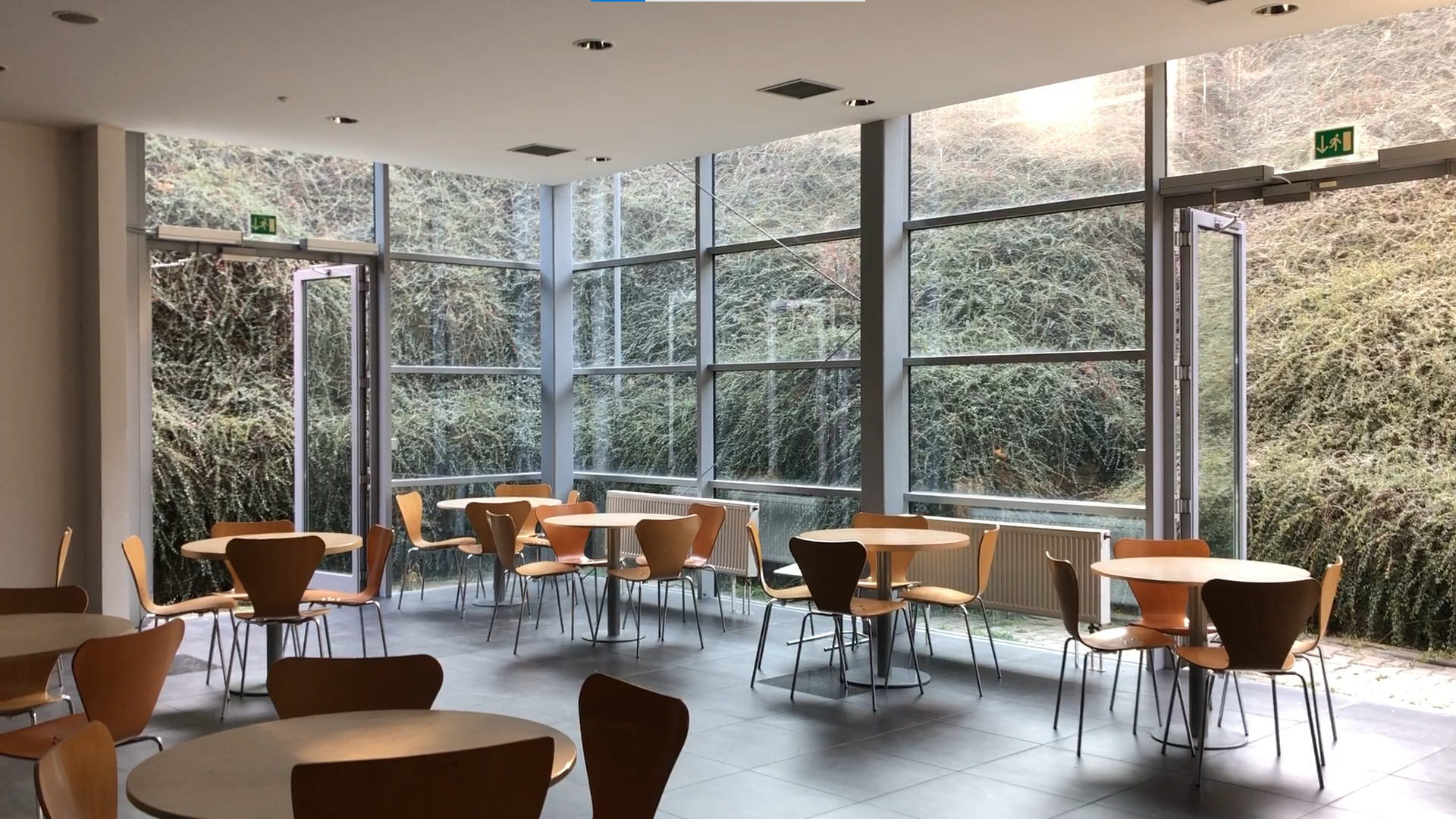
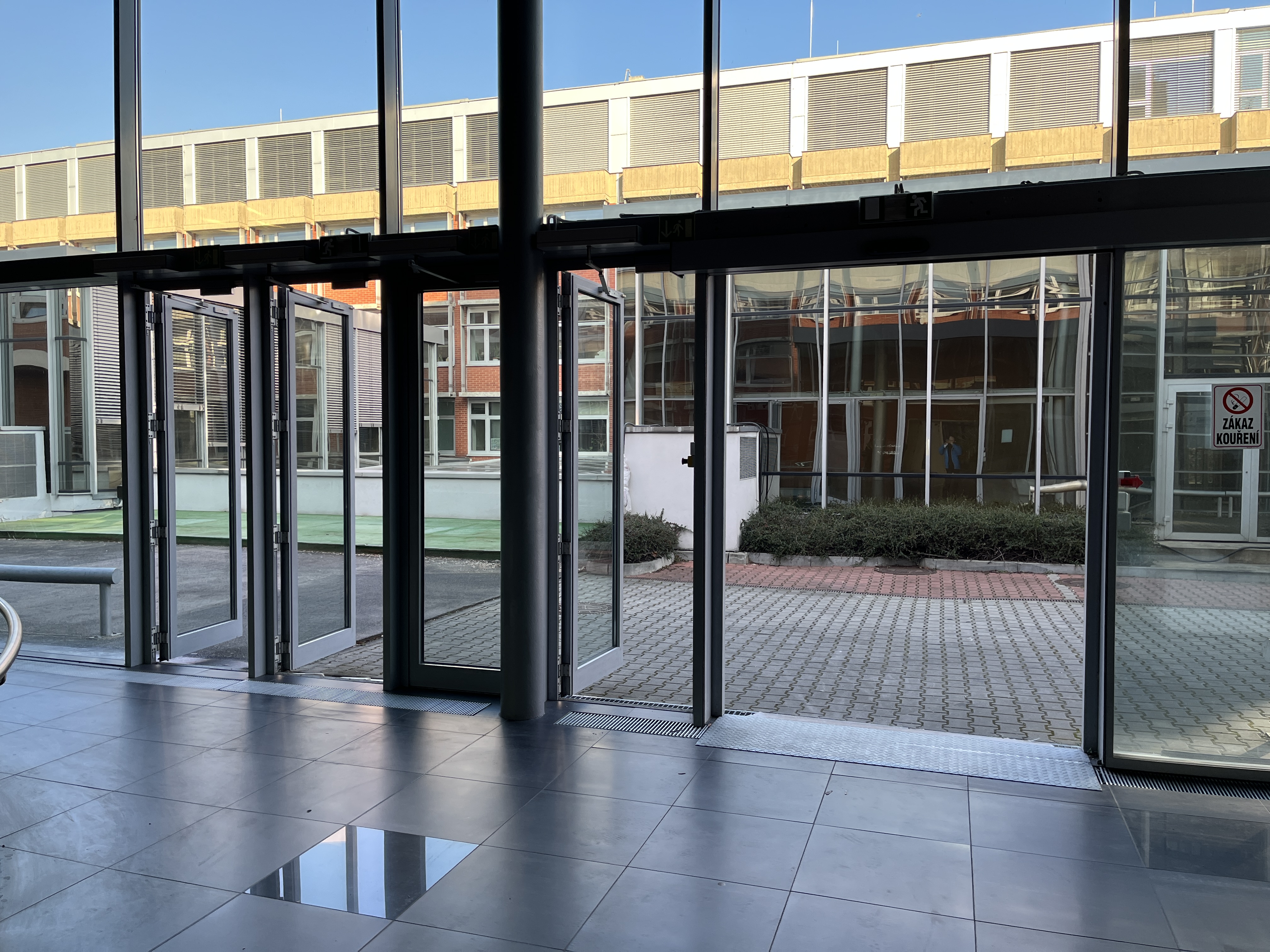
For instance, do you know about these escape exits from the Italian Building under the AK VŠE, from which you exit to the area between the IB/RB and the NB?
When an alarm is declared, the turnstiles at the entrance to the Italská Building and the emergency exits, which are normally closed, will open automatically.
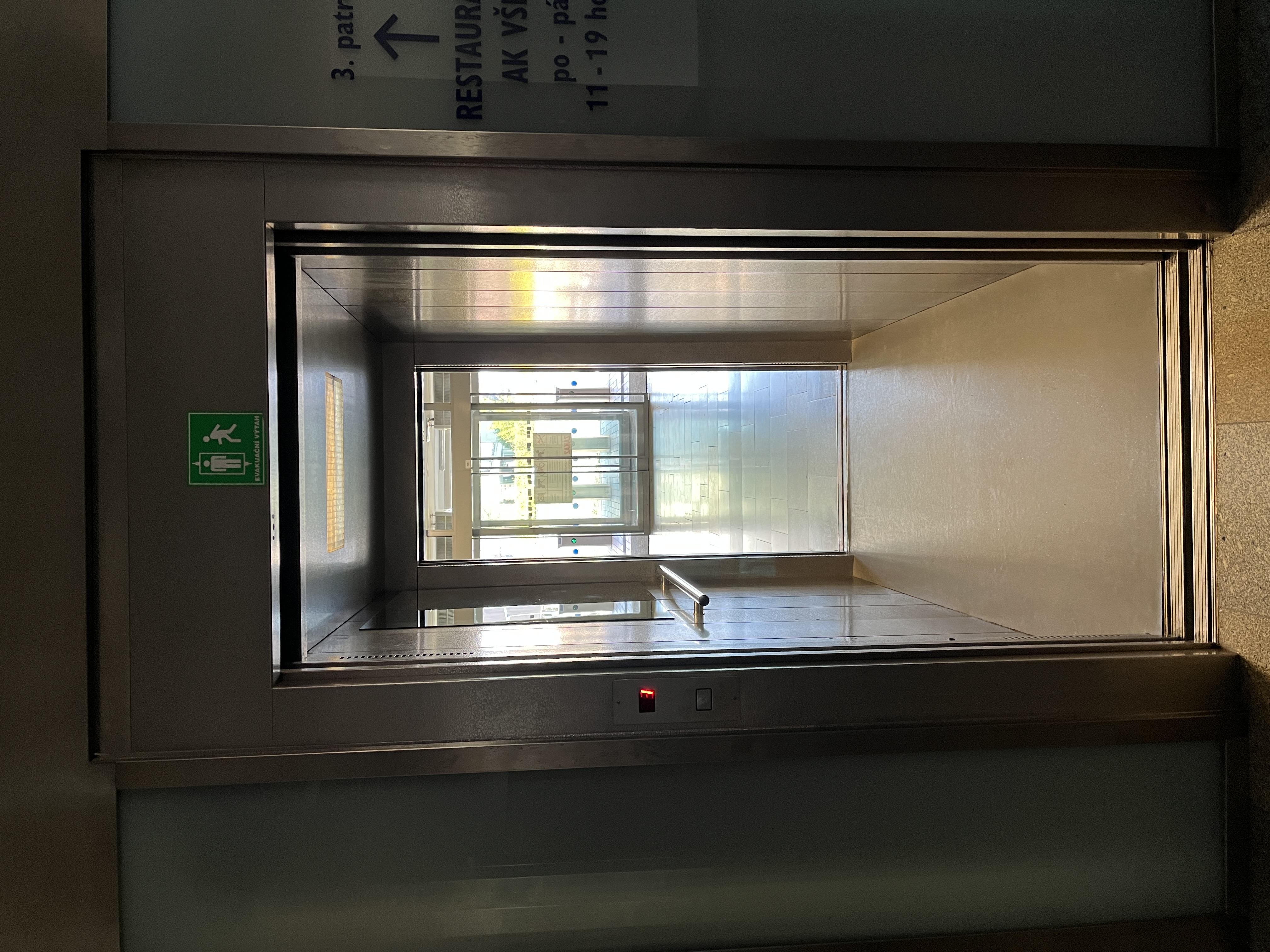
Remember also that lifts that are not marked as evacuation lifts cannot be used in an emergency when an alarm is declared.
5.3. HIDE!
If escape is not possible, take cover.
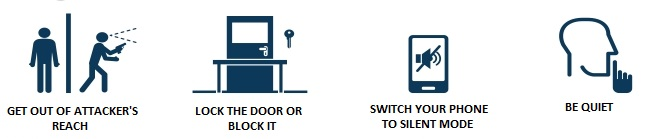
- Find a suitable place to hide as quickly as possible. Leave open areas, corridors, halls and seek shelter outside these places. Take cover in such a way as to reduce the possibility of being hit.
- Keep quiet. Turn off the ringer on your mobile phone.
- Lock or bolt doors, for example with a chair. Barricade yourself with heavy objects such as photocopiers or furniture.
- Turn off noise and light sources (radios, projectors, monitors, etc.).
- Do not hide directly behind doors. An attacker may shoot through the door. Hide behind solid objects.
- Choose a hiding place from which you can escape.
- If possible and if the situation permits, call for help - phone no. 158.
Task
Where would you hide if an attacker attacked at this moment? How would you secure your hiding place?

ATTENTION!
When seeking shelter, it is important to remember certain technical limitations, such as the way the classroom door can be opened, as they are ordinarily directed out of the classroom for (fire) safety reasons. Blocking the door with furniture and other objects does not provide protection from an attacker in such a case. If there is no other option, the principle is to secure such doors against opening, e.g. with a cable or a belt.
ATTENTION!
Similarly, the possibility of locking the classroom should be taken into account. While locking is automatically assumed for offices, classrooms are generally not equipped with a lock. This is another point in the ongoing analysis of infrastructure provision. It is also not advisable to hide in rooms with glass walls or doors and open spaces, from which it is always recommended to look for an escape route.
5.4. FIGHT!
If you come into close contact with an attacker and it is not possible to run or hide, fight.
- Attack aggressively.
- Use anything as a weapon that will increase your chances of success - a fire extinguisher (aim the extinguisher at your head when using it), a chair, a broom handle......
- Throw objects at the attacker, aim for the head. Choose heavy objects that can be thrown.
- The attacker will not spare you. Don't negotiate, don't beg for mercy.
- Shout loudly during the fight.
- If there are more than one of you, always attack en masse and at the same time.
- If you've disarmed the attacker, don't pick up his weapon, the police might mistake you for him. Kick the weapon carefully to a safe distance. Call loudly for help.
Task
What could you use as a weapon at this point? Look around and find objects you can throw and objects you can use as a contact weapon.

6. After the police arrive at the scene of the attack
You can still get in contact with the intervening units during the active shooter's "rampage" or after he is incapacitated or has left the attack site. The important thing is not to be mistaken for the attacker. Expect it to take some time for the police to arrive at the scene of the attack.
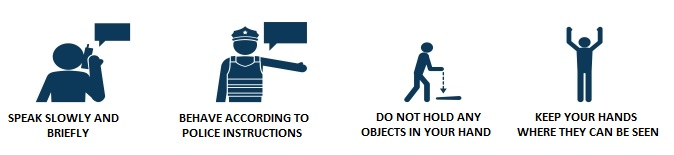
Follow these guidelines.
- Remain calm and follow police instructions.
- Give the police the information they need.
- Do not interfere with the police.
- Keep your hands where they can be seen at the time of the encounter with the police.
- Do not shout and refrain from making wild gestures.
- Do not leave the shelter until instructed to do so by the police or when you are 100% certain that the attack has ended.

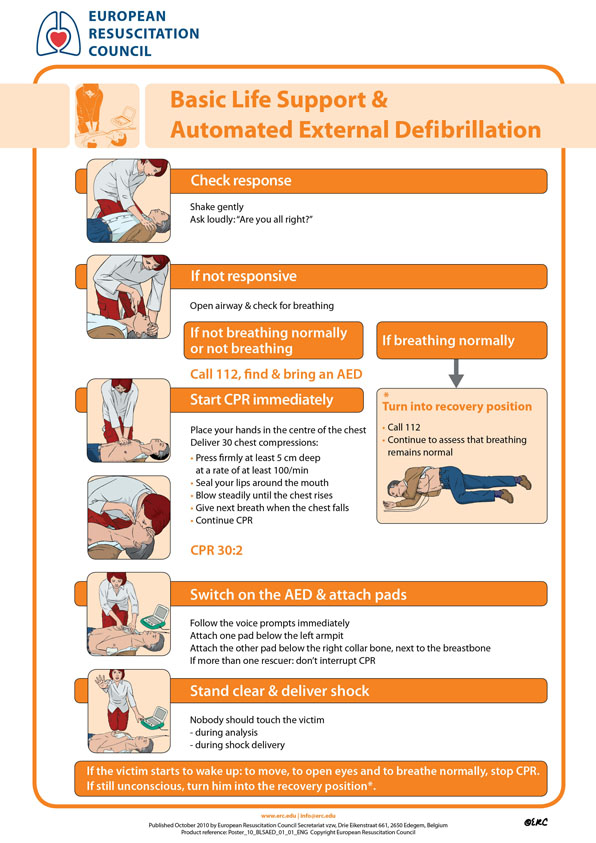
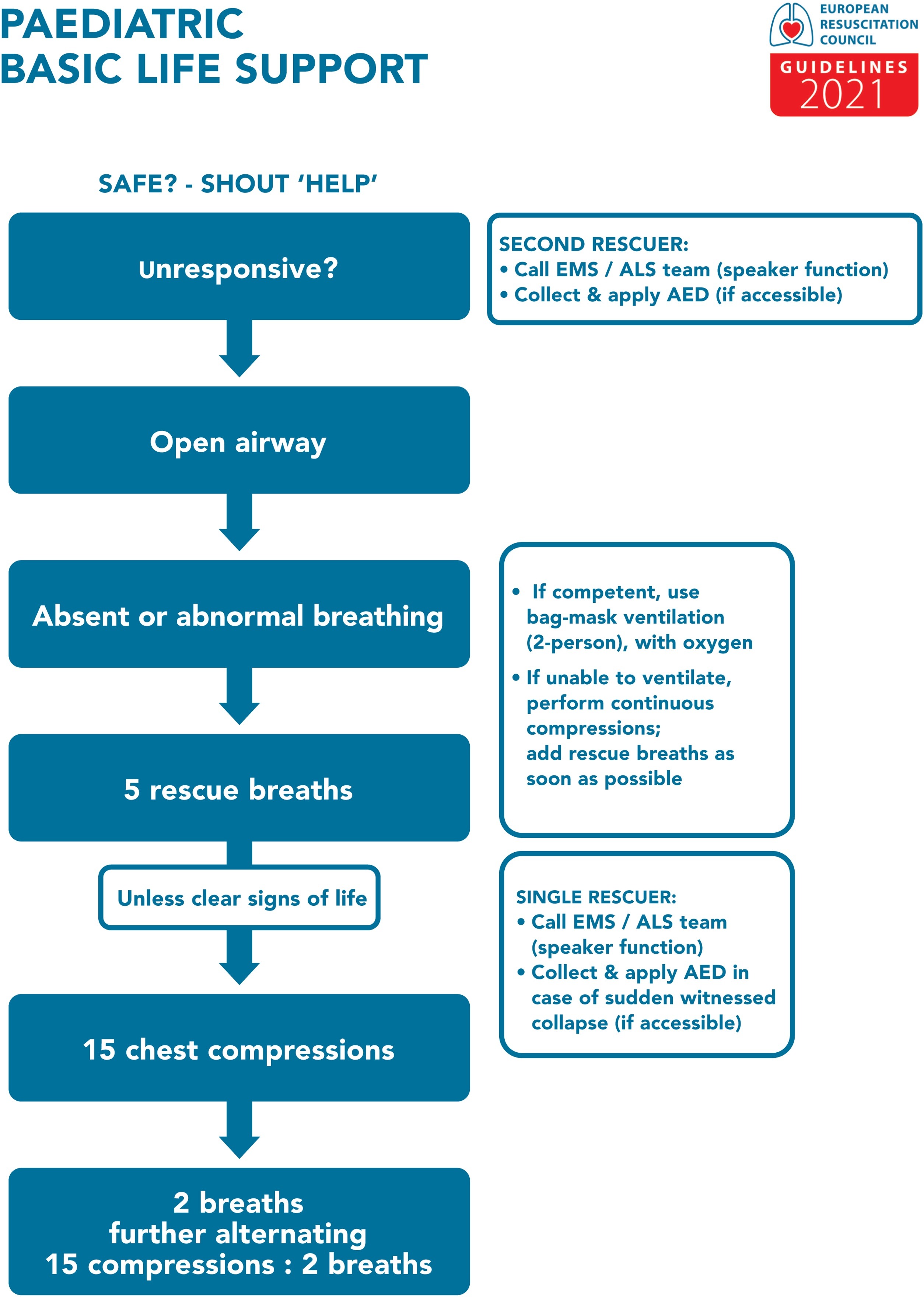
If such a need arises, your condition and the security situation allow, i.e. it is absolutely clear that you are no longer in any danger, and it would be in accordance with orders of the intervening units, be prepared to provide first aid to those who need it.
Are you ready to provide first aid if there is such a need? Remind yourself of the principles presented in the mandatory occupational health and safety training. It is accessible in Moodle in the Training courses section
7. How to cope with the attack
If you survive an active shooter attack, you have a life experience that is very difficult to deal with. You have experienced a traumatic event that must have left a deep mark on your psyche. The initial reaction to a traumatic event is stress, which can persist for days after the attack.
Possible physical consequences of the trauma:
- fatigue,
- poor sleep,
- nightmares,
- difficulty concentrating,
- stomach ulcers and other health problems.
Psychological effects of trauma:
- mood swings,
- feelings of helplessness,
- sadness,
- irritability,
- aggression.
When to seek professional help:
- you are unable to carry out normal activities at home or at work,
- even though a long time has passed since the attack, you still feel unwell,
- isolating yourself from other people,
- suffering from depression,
- contemplating suicide,
- nightmares and frightening memories.

In these cases, VŠE offers professional psychological help provided by the Academic Centre through Academic Psychological Counselling.
Consultations are provided in both Czech and English and you can sign up for them directly in the registration system on the Counselling Centre's website.
On this website you can also find links to other professional facilities providing non-stop assistance.
In an article on the intranet, the Academic Psychological Counselling centre summarises in more detail the different categories of psychological problems and the possibilities of their handling.